
Early Development
The concept of artificial intelligence emerged in the mid-twentieth century when researchers began asking whether machines could imitate human reasoning. Early work focused on symbolic AI, where systems were programmed with rules and logic to solve specific problems. The Dartmouth Conference in 1956 is often considered the formal beginning of AI as an academic discipline.
AI Winters and Recovery
Despite early optimism, AI research faced periods of reduced funding and progress known as AI winters. These happened when expectations were too high and available computing power was too limited. However, advances in hardware, data storage, and algorithms later allowed the field to recover. Despite early optimism, AI research faced periods of reduced funding and progress known as AI winters, first in the mid-1970s and again in the late 1980s. Expectations had run ahead of what the technology could deliver, and both computing power and available data were insufficient. Advances in hardware, data storage, and algorithms later allowed the field to recover.
Machine Learning Era
AI changed significantly with the rise of machine learning, where systems learn from data instead of relying only on hard-coded rules. This made AI more flexible and more useful for tasks such as recommendation systems, fraud detection, translation, and image recognition.AI changed significantly from the 1990s onwards with the rise of machine learning, where systems learn patterns from data rather than relying only on hard-coded rules. The release of the ImageNet dataset in 2009 and the success of AlexNet in 2012 demonstrated that deep neural networks could outperform traditional methods on tasks such as image recognition. This made AI far more flexible and useful for recommendation systems, fraud detection, translation, and computer vision.
Current State of AI
Today, AI is used in both consumer products and enterprise systems. Virtual assistants, chatbots, generative image tools, medical diagnostic systems, and predictive analytics platforms all demonstrate how AI now operates in real-world environments. Current AI is defined by deep learning, large language models, automation, and increasingly personalised digital experiences.
1956
The Dartmouth Conference formally introduced artificial intelligence as a field of academic study.
1970s–1980s
AI research slowed during periods known as AI winters due to high expectations and limited computing power.
1990s–2010s
Machine learning and greater data availability helped AI become more practical and commercially useful.
Today
AI now powers chatbots, recommendation systems, medical tools, automation platforms, and generative content.
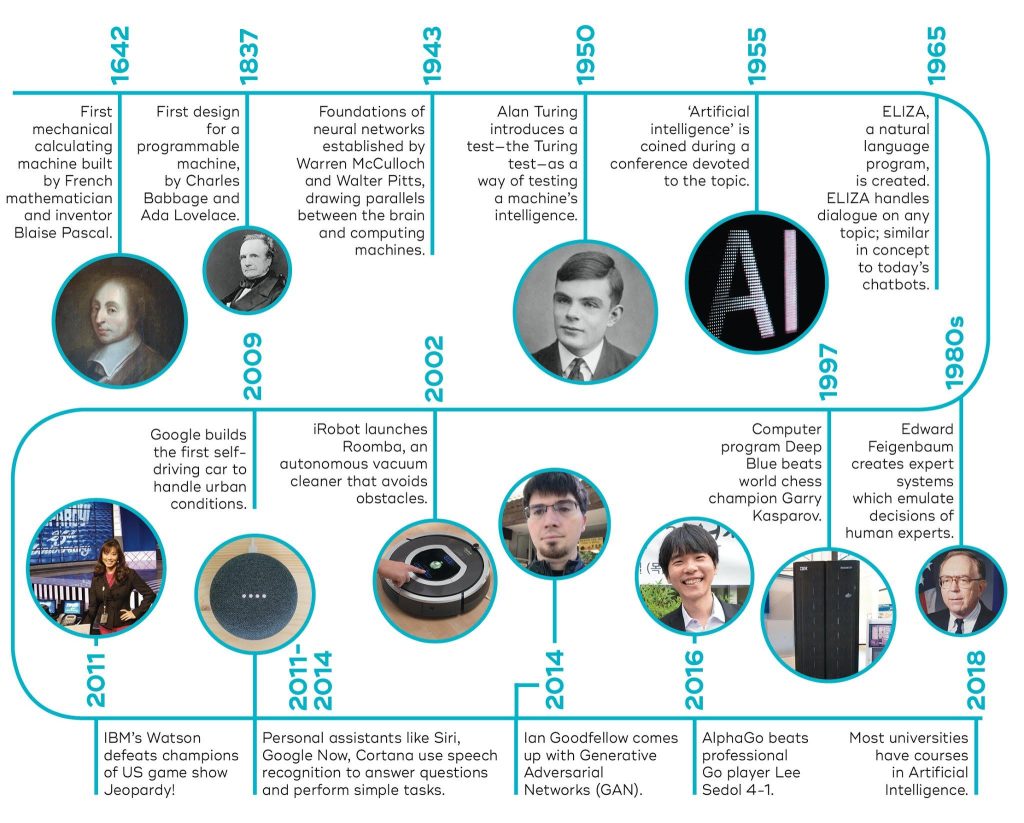
Figure 1: The evolution of artificial intelligence from early symbolic systems to modern machine learning and deep learning technologies.
What Comes Next
AI research is now focused on areas such as artificial general intelligence (AGI), multimodal models that process text, images, and audio simultaneously, and AI safety — ensuring systems remain aligned with human values. The pace of progress suggests that the coming decade will bring further transformation across medicine, education, science, and public infrastructure.
Key Moments in AI History
A closer look at the breakthroughs that shaped artificial intelligence.
| Year | Event | Why It Matters |
|---|---|---|
| 1950 | Alan Turing publishes “Computing Machinery and Intelligence” | Introduced the Turing Test — the first formal proposal to measure machine intelligence. |
| 1956 | Dartmouth Conference | The term “Artificial Intelligence” was coined. Considered the birth of AI as a field. |
| 1966 | ELIZA chatbot created | One of the first programs to simulate human conversation — a precursor to modern chatbots. |
| 1974–1980 | First AI Winter | Funding dried up after AI failed to meet inflated expectations. Research slowed significantly. |
| 1997 | IBM Deep Blue defeats Garry Kasparov | First time a computer beat a reigning world chess champion — a landmark moment for AI. |
| 2011 | IBM Watson wins Jeopardy! | Demonstrated AI’s ability to understand and respond to natural language questions. |
| 2014 | Generative Adversarial Networks (GANs) introduced | Enabled AI to generate realistic images, opening the door to creative AI applications. |
| 2022 | ChatGPT launched by OpenAI | Brought generative AI to the mainstream — over 100 million users within two months. |
| 2024 | EU AI Act adopted | First comprehensive AI regulation passed, banning high-risk AI systems and requiring transparency. |
Understanding the AI Winters
AI development has not been a straight line. There have been two major periods known as “AI Winters” where progress stalled dramatically.
First AI Winter (1974–1980)
Governments cut funding after early AI systems couldn’t live up to the hype. Researchers had promised human-level intelligence but delivered limited results. The US and UK both scaled back investment significantly.
Second AI Winter (1987–1993)
The market for specialised AI hardware (LISP machines) collapsed as cheaper alternatives emerged. Expert systems proved expensive to maintain. DARPA cut AI funding, and public interest faded once again.